
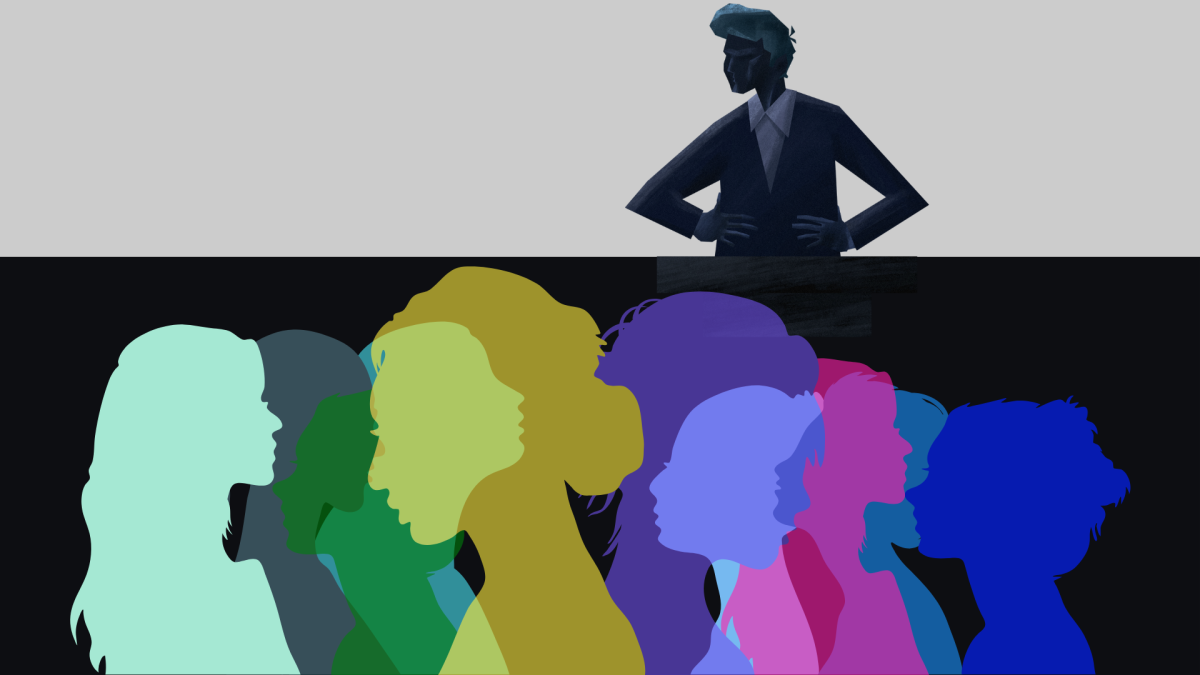
The United States (U.S.) ranks 30/181 in women’s rights, with an average score of 0.84. The number one country for women’s rights is Denmark, with a score of 0.93, and Afghanistan is last, with a score of 0.27, according to the Georgetown Institute for Women, Peace and Security (GIWPS).
GIWPS uses the Women, Peace and Security index, which is based on Inclusion, Justice and Security, and is measured from zero to one, with one representing the most rights for women, and zero being the least.
Inclusion measures the representation of women in positions such as government, employment and education. It also measures access to financial services and cell phones.
Justice measures the level of lawful discrimination or oppression that women have. It measures the amount of access to justice, equal treatment under the law, maternal care or bias toward male children.
Lastly, security measures the level of safety and protection in places such as households, neighborhoods, or workplaces for women. It also measures the amount of political violence against women and how many women live near places of war or armed conflict.
The amount of rights a woman has in a particular country depends on a wide variety of variables, such as economic, political, or cultural factors. For example, a very religious country may be opposed morally to abortion, therefore restricting a woman’s right to get one.
A country that may prioritize traditional gender roles with men as breadwinners and women as homemakers can restrict the rights of the women who live there. With these ideals, some may believe that allowing women into public, community, or leadership roles will take away from their ability to look after the home or children, and give them an idea of the independence that men have.
According to the National Women’s History Museum, some anti-suffragists argued that women lacked the mental capacity to understand politics, and others said that allowing twice the votes would not add any value, and simply cause voting inflation. Despite this, women have been the leaders of many countries around the world. The U.S. is one of the only countries that hasn’t had a female president where it is an option.
In present-day America, some who believe that women’s rights should be a priority have been protesting changes made by the Donald Trump Administration since the new president started signing executive orders in January 2025. Some orders Trump made that are being protested are cutting budgets for programs that assist communities like women, children, the impoverished, and people of color, according to Planned Parenthood.
Even the voting rights of women may change, despite the 21st Amendment that outlawed voting discrimination based on sex. Recently, the SAVE (Safeguard American Voter Eligibility) Act was passed, which requires one’s birth certificate name to match one’s current name, to prove identity and citizenship. This act can help prevent voter fraud, but for women who take their spouse’s last name to marry, it can make it harder to vote, restricting their rights.
“[The SAVE Act] would require voters to show documentation of citizenship, like a passport or birth certificate, to register to vote and cast their ballots. For the approximately 80% of married women who take their spouse’s last name, their legal name no longer matches the name on their birth certificate, which would require additional documentation to prove their identity and citizenship,” Ms. Kelly Krawchyk, Civics & Government teacher, said
One example is supporting bills to defund Planned Parenthood. It is the H.R.271 bill of the 119th Congress, signed into law on Jan. 9 of 2025. The goal of this bill is to prevent funding for abortions specifically, not counting cases of sexual assault or if the mother’s life is in danger, according to Congress.gov.
Those who believe that abortion is healthcare and that every woman should have access to safe abortion and reproductive healthcare may believe that these bills should be overturned, and that Congress may be attempting to curtail women’s rights.
Throughout history, the amount of rights a woman has in a certain place has depended on the views of the government and the voters. Many people who are upset about this have chosen to speak out, adding more freedom and rights for the women of the future to live their lives as they wish.