


Once Nov. 1 rolls around, most people have just two things on their mind: the cute aesthetics of the holiday season and eating more food than they should on Thanksgiving. Many do not consider the meaning of the holiday season, or what it means for Native Americans of their region. They know next to nothing about the hardships native people faced, their stories or their traditions. Native culture is something that is built on the land, as are their stories about hardships they and their ancestors have faced and overcome.
In New England, specifically Pennsylvania, the main tribes were the Lenape, Susquehannock, Erie, and Shawnee, with the latter mainly residing in the Ohio River Valley. The tribes share the names with their respective rivers, and even Lake Erie is named after the Erie tribe. Going further abroad, twenty-four of the fifty states are named with Native words. Native influence is everywhere.
Pop culture has tainted Native American culture, and has stolen it and whitewashed it. Fashion alone is an indicator. Many people who refer to western fashion as “Cowpoke fashion” or “rancher’s attire” most likely fail to realize the heavy native influence on the clothes.
Beadwork was and still is often seen in western clothing, but it originated in Native clothes. The bean patterns told stories, as well as signified one’s status and beliefs. Beadwork was typically seen on belts, boots, and jackets.
Fringe was also frequently seen on jackets of lone cowboys traveling the range, but this also came from Native American clothing. Fringe was typically on the hems of shirts, cuffs of sleeves, on the seams of jackets or shirts and on the backs of moccasins. It wasn’t just for decorative purposes; it made camouflage easier and repelled water.
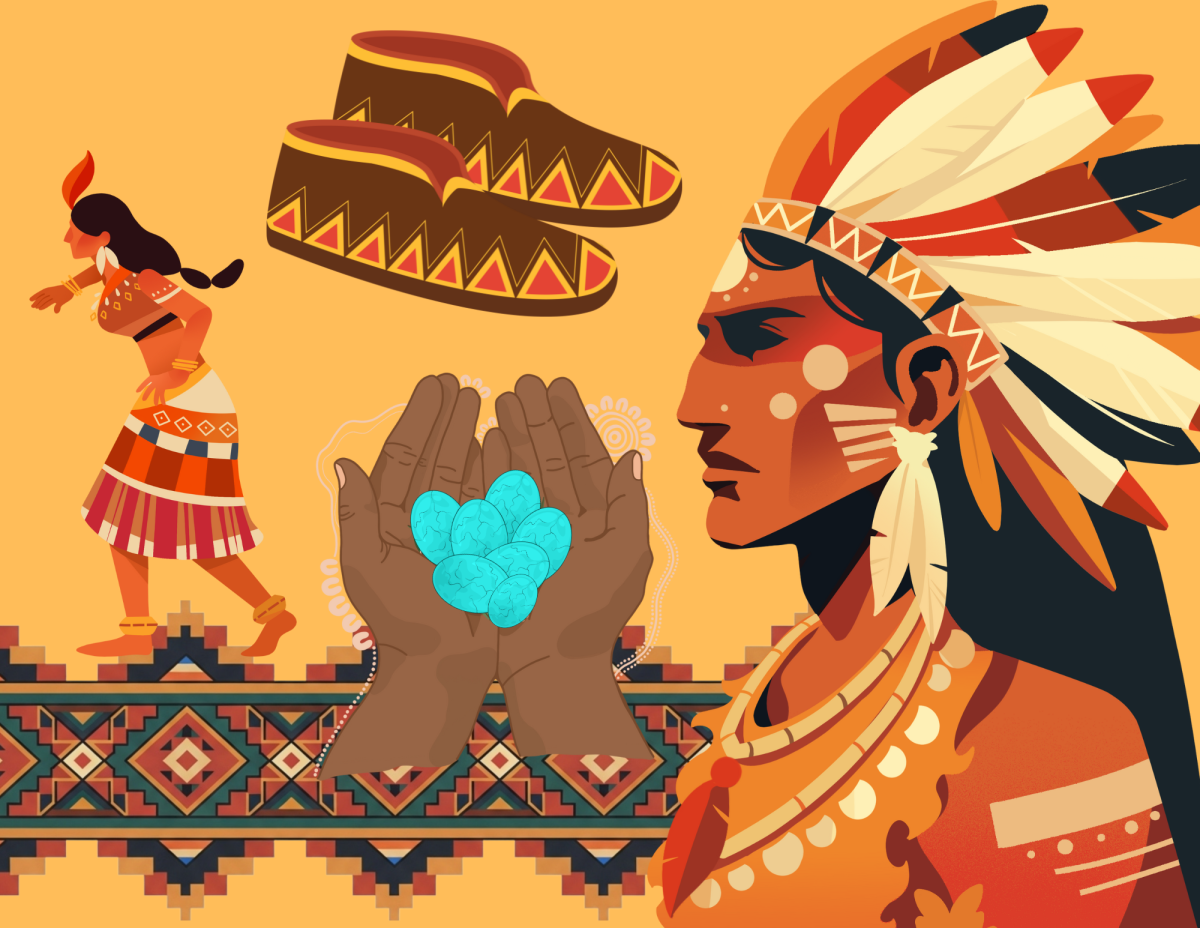
Moccasins were thick leather shoes and decorated with ornate beadwork patterns, paint, or even porcupine quills when the region allowed for it. They were handy as they protected the wearer from tough stones and coarse ground, while allowing for the foot to feel contact with the ground and having more mobility. They helped to connect people to their “Mother Earth,” as Natives believed. They were quickly picked up by the cowboys in the west.
Turquoise is commonly seen being worn by people in the west, or people who wish to have themselves associated with western vibes. However, it originated from Native Americans, not cowboy culture. To the Natives, the gemstone symbolizes good fortune and life, as well as a shield and protectant against harm.
Most of these things, if not all, are automatically thought of as belonging to the western cowboy culture that movies so fondly portray, when that is not the case.
Words were also frequently borrowed from the Native language, like barbecue and hurricane.
According to the Washington Post’s article “It’s time for a history lesson — one that doesn’t leave out America’s native people,” the author Courtland Milloy stated, “Much of the U.S. highway system is built over the trading trails laid out by Indians to connect their villages.” Native Americans have such a huge impact on the culture today, and paved a path to greatness through their actions. Popcorn, chocolate, vanilla, chewing gum: all from Native Americans.
Native Americans are constantly buried down in the depths of history, and barely mentioned in text books, when they were and are a huge part of American history and the country that America is today. Native culture should stop being whitewashed and Natives should be recognized for who they are.