


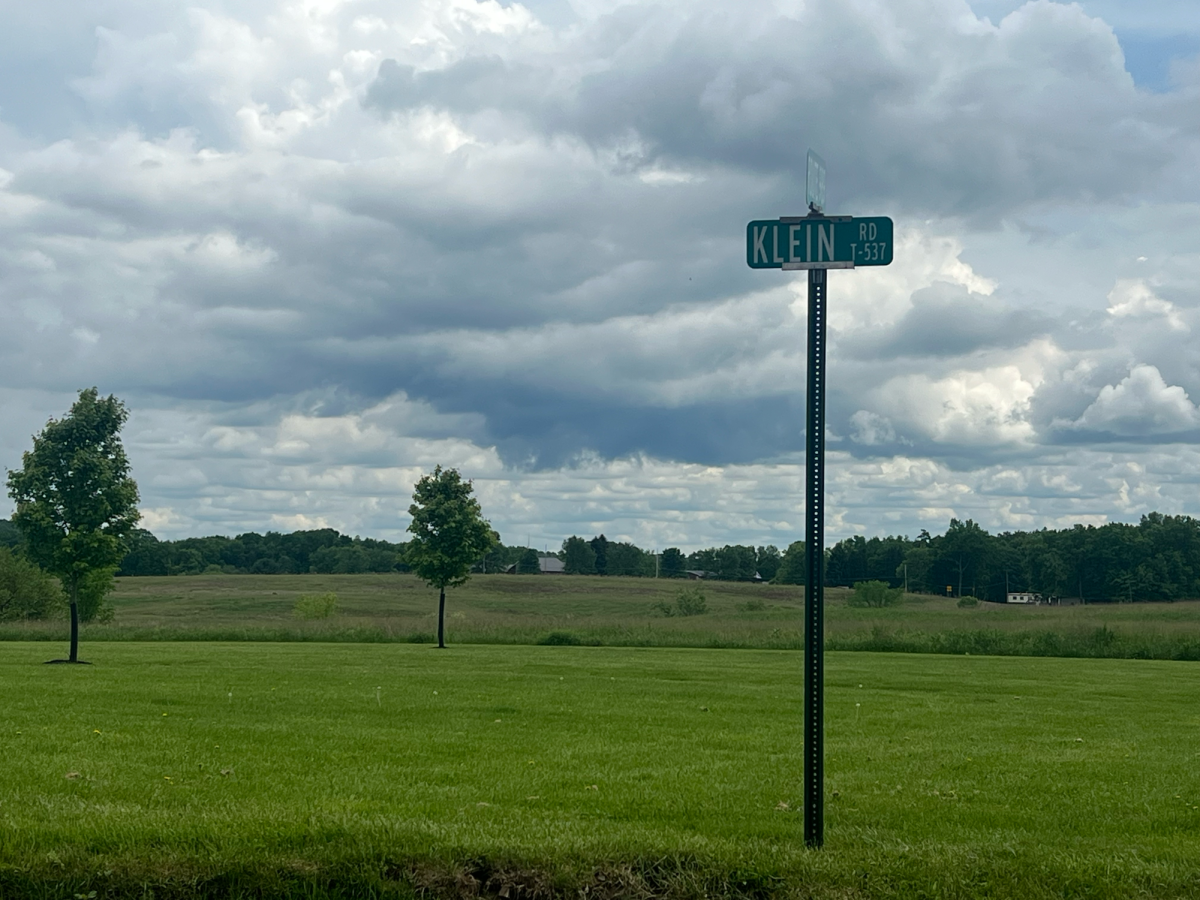
Beginning in 2024, a plan was presented to the New Sewickley Township Planning Commission to build a housing development with 220 homes across 94.9 acres of land along Klein Road. When the project was announced, the news divided the community, with many supporting the growth, citing an increase in tax revenue, while those who opposed the project argued it would urbanize the area, which is well-known for being rural.
New Sewickley Township has been composed of farms and open fields for generations, with agriculture being an important foundation for the community. A massive development could harm the environment or degrade the land used to grow produce and raise livestock. In general, developments such as the one in progress bring with them a series of concerns regarding the environment, including habitat destruction, increased carbon emissions and increased stormwater run-off.
A significant portion of the land under development is woodland, which will need to be cleared before construction can commence. The Beaver County Area has a high biodiversity with various species of animals living in the ecosystem. Developing the area could lead to significant habitat loss and likely increase urban wildlife, animals adapting to living among human neighborhoods and seeking shelter, food and water from the town. One stipulation during the proposal was that trees be planted within the new community to counteract the effects of the deforestation in the cleared land.
Additionally, an increase in paved or hardened surfaces, like paved roads, driveways and sidewalks, prevents rain and storm water from re-entering the ground and instead causes potentially devastating run-off. This creates a higher risk of washouts in areas with softer soil. Water lines will need to be installed in order to provide sufficient clean water to residents.
The developers intend on funding part of the length of the water line installed in the area, since it is necessary to supply water for development. For people living along the line’s path, tapping in is optional; this gives those who do not have adequate water an opportunity to have access to it.
The vast majority of homes in New Sewickley also rely on groundwater wells. With the addition of the waterline, more houses will have access to city water. Another side effect of the run-off is that the wells in the surrounding land will need longer periods of time to refill, as less water is able to reach the earth. Water quality may also be reduced, as stormwater carries any debris left on the road back to the water source. This pollution could hurt the surrounding farms, most of which sell their produce in local markets.
To combat this, the design of the development includes a water treatment facility to mitigate the damage of runoff water carrying any contaminants. The only problem with the facility is that the treated water would enter Brush Creek, which is already known to flood frequently during heavy rain.
However, since the U.S. Environmental Protection Agency (EPA) is required to approve all parts of the plan—including water run off and pollution—its regulations must be followed when completing the development project. The regulations set by the EPA will guarantee that discharge flowing into Brush Creek is monitored.
There are also several other construction strategies that could be used to help prevent environmental harm, which are required and regulated by the EPA.
Housing plans in rural areas, such as this one, can have a positive effect for the township and community, as long as the safety of the environment is managed.