


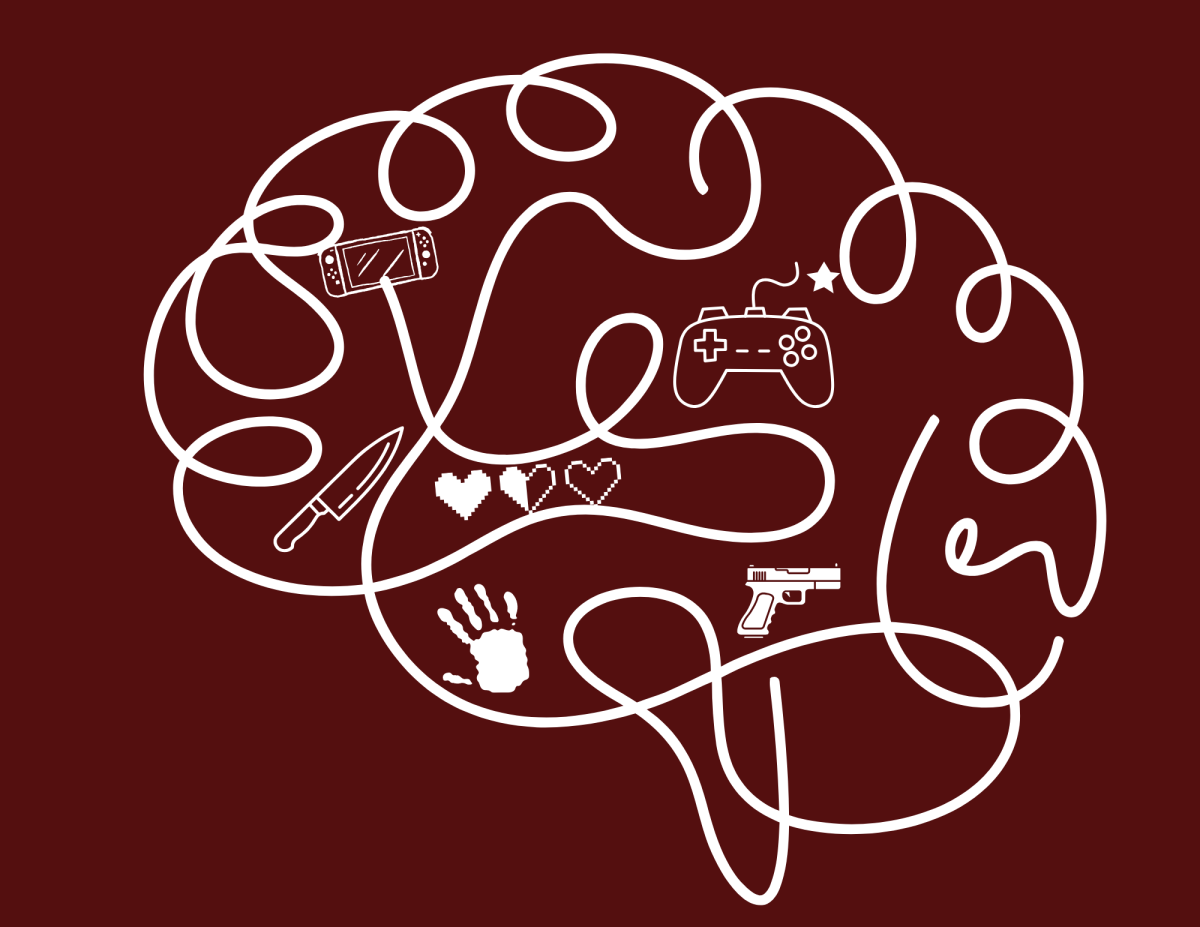
In a world of persistently evolving technology and media, the human brain has no other option than to attempt to catch up. For teenagers, this process is vital to development. However, when media platforms constantly push exposure to sensitive information and topics, the course of brain development can undergo changes that impact the lives of many adolescents and young adults, whether they realize it or not.
One growing concern is the normalization of true crime content. True crime podcasts and documentaries have surged in popularity in recent years, with approximately 84% of all Americans aged 13 years or older consuming the true crime genre in some form, as reported by the Pew Research Center. These stories offer portrayals of real-life violence and tragedy, often in graphic detail. While they are educational and entertaining in nature, there is a risk that adolescents may continue to see these stories as normal media, thus diminishing the moral and emotional weight they carry.
A more recent example is that of the Jeffrey Epstein case. Epstein, a late billionaire financier, was charged and sentenced for molesting multiple women and underage girls. Recently, the United States Department of Justice has been releasing the Epstein Files, which are documents of Epstein’s legal and social affairs, including emails and photographs. The files, while redacted, reveal many hidden truths about events that occurred on Epstein’s private island, with rumors about celebrities involved and grotesque actions, many of which involve minors and even reports of cannibalism. With the rise of this news, documentaries and podcasts have also been growing in popularity. These stories, as well as the visual evidence from the files, have created a frenzy on social media and other platforms, exposing young individuals to engage with the graphic content, finding difficulty in controlling their curiosity.
Similarly, violent video games and movies have long been debated for their influence on adolescent minds. These platforms immerse audiences in simulated violence. The general audience for these movies and video games tend to be teenagers and adolescents, who are more susceptible to damage.
“Teenagers are more vulnerable because their brains are still developing, particularly in the prefrontal cortex, which is responsible for judgment, impulse control and emotional regulation,” Ms. Maria Porter, College in High School Psychology teacher, said. “During adolescence, the brain is highly responsive to new experiences and stimulation, so repeated exposure to intense or violent media may have a stronger influence on emotional reactions than it might for a fully developed brain.”
Social media further amplifies this kind of exposure repeatedly. The popular platforms spread graphic content, including gore and disturbing imagery. The posts attracting most views are the most intense, showcasing depictions of crime, accidents, and most of all, politically charged incidents such as US Immigration and Customs Enforcement raids. Often, after viewing these disturbing raids, internet users comment using memes and reaction images.
“When people encounter something uncomfortable or disturbing, responding with humor or memes can be a way to reduce emotional tension or distance themselves from the seriousness of what they’re seeing,” Porter said. “Online culture also encourages quick, shareable reactions, so humor often becomes the easiest social response even when the original content is serious.”
Critical consequences of this repeated exposure include lowered empathy and media literacy, or the ability to analyze and interpret media messages. Without these skills, adolescents may develop inadequate social and relationship skills, as well as struggle to distinguish between fact and misinformation.
“Over time, desensitization reduces emotional reactions to violent events and decreased empathy toward victims. It becomes so commonplace that the weight of the situation disappears,” Porter said. “In some cases, it can affect how individuals interpret aggressive behavior, making them more tolerant of it in media or everyday situations.”
When consuming media, awareness is one of the most useful tools one can use. With constant exposure to violent media and sensitive content, teenagers may experience a decline in critical skills, such as maintaining essential awareness. What the world could use right now is an understanding of this kind of consumption, so society can foster healthier habits and build a stronger emotional resilience.