


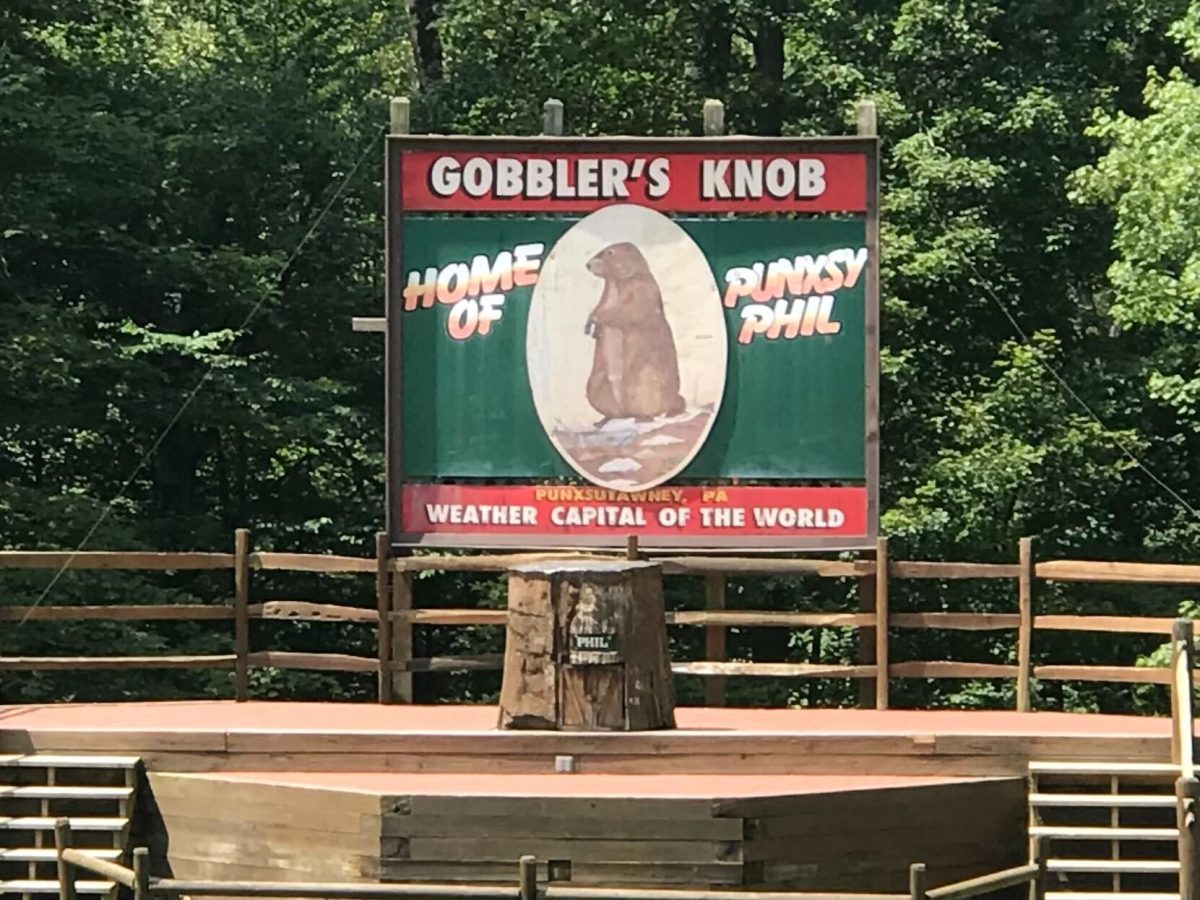
Groundhog Day goes back to the 1880s. The holiday was brought over to Pennsylvania by German immigrants, the tradition was based on a groundhog’s prediction of the weather. The legend says that if the groundhog sees its shadow, it predicts six more weeks of winter. No sighting of a shadow indicates early spring.
Groundhog Day is celebrated on Feb. 2 each year. This day is halfway between the winter solstice and the spring equinox. The tradition originated from the Pennsylvania Dutch, where it was believed that the presence of small animals predicted whether winter or early spring would follow, depending on whether they saw their shadows. If the groundhog saw their shadow, the winter would continue for longer.
This tradition has historical roots. Groundhog Day has roots in a pre-catholic celtic festival named Imbolc, which was held on Feb. 1 or 2. Despite a lack of research into this festivity, its meaning, the celebration of the first day of spring, carried through centuries. When the church began to take over many parts of Europe, they renamed Imbolc to Candlemas. This eventually evolved into Groundhog Day.
“I think traditions are always important,” Dominic Severin (12) said.
However, there’s more than one groundhog that predicts modern-day weather. The most popular is Pennsylvania’s own Punxsutawney Phil, who has approximately a 35-39% success rate of predictions. His more accurate counterpart, having around a 80% chance of accurately predicting, is Staten Island Chuck, who resides in New York. South of Pennsylvania, in Vermillion, Ohio, they predict how long the winter will last by the color of woolly bear caterpillars. This is found to be unreliable because the stripes of color on the caterpillar’s body are based on the previous year’s weather.
The movie “Groundhog Day” was released in 1993. It was about a Pittsburgh weatherman, Phil Connors, who was played by Bill Murray. Phil finds himself stuck on Feb. 2, Groundhog Day, due to a time loop phenomenon. While covering the event in Punxsutawney, PA. The beginning of the movie characterizes Connors as a grumpy man who refers to the groundhog as a “rat”. After reliving the day many times, he has a change of heart into a kind, thoughtful man, and also finds love along the way. Once he improves his mindset and turns to tenderness rather than callousness, the time loop ends. This movie is what comes to many minds when they hear of Groundhog Day, apart from the furry groundhog himself.
“When I hear of Groundhog Day, I think of the movie … It’s just for fun, there’s no way it’s accurate,” Steven Meyer (11) said.