

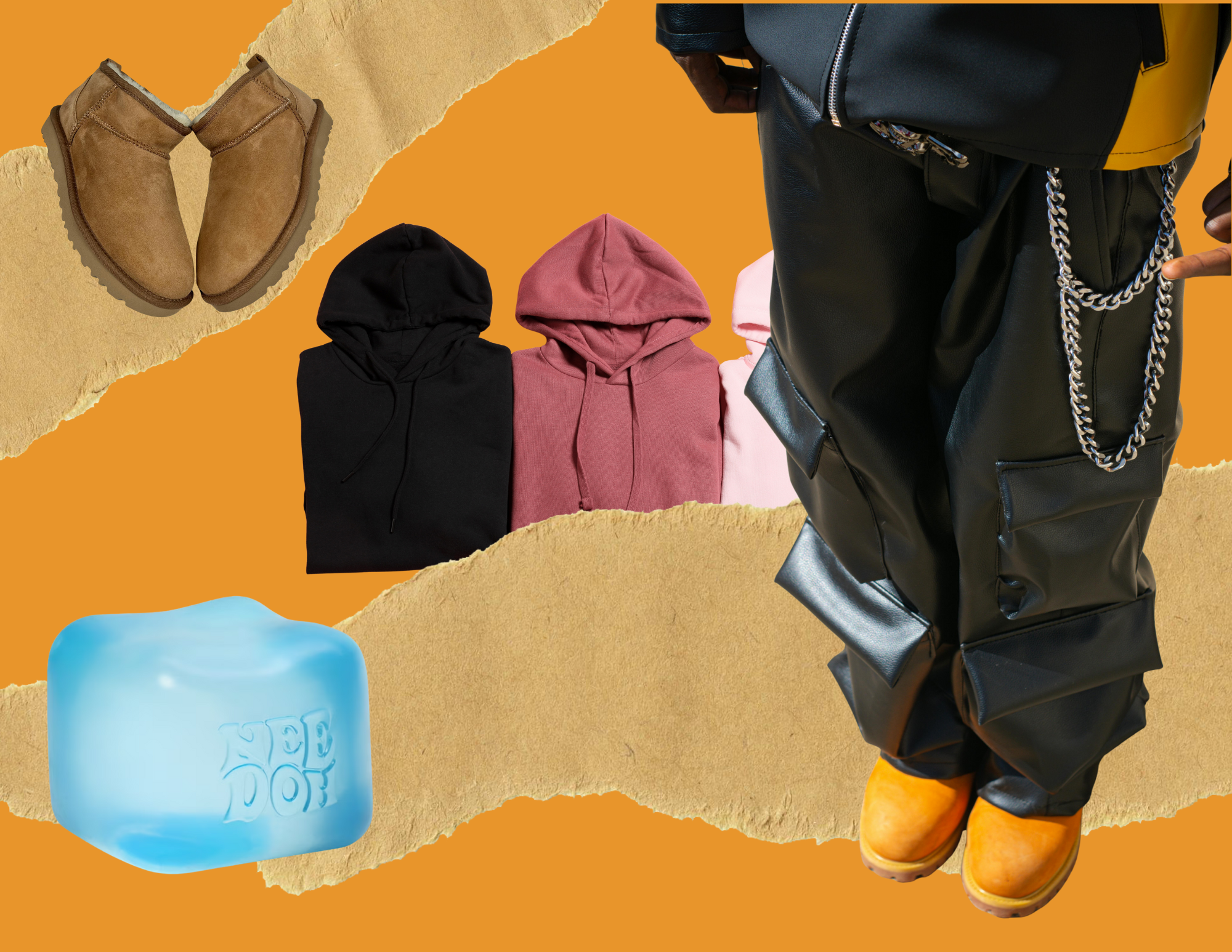
Endemic to our economic and societal constructs, consumerism is an ever-increasing problem. Among other things, it has decreased the quality of items and caused production levels to skyrocket. With the internet force-feeding people trends and products they think they should buy, alongside the greed of large corporations, our generation has become susceptible to the lifestyle of consumerism.
An unfortunate trend in the purchase of NeeDohs by high school students has been seen in recent months. In the past, being seen with a toy in high school was embarrassing and highly frowned upon. It was avoided to prevent subjecting oneself to bullying. Now, it is something considered “trendy,” and as all trends work, if the popular kids are doing it, so should you.
Thus, more NeeDohs are purchased off the shelves and stores notice, so they stock up on the cheap junk. NeeDohs started the new fidget craze, but slime and squishies have also made a reappearance. These toys are extremely distracting in a classroom setting.
Like all fads, this trend will fade as suddenly as it began. The outcome is thousands of toys ending up in landfills and polluting the water, once people realize they do not want the toys anymore. This is something that is common with clothing brands and is seen now more frequently than in the late ‘90s and early 2000s, which is when it started to become a problem.
The term “fast fashion” was coined in 1989, due to Zara advertising several different clothing lines and promoting a swift production style. However, it was not viewed as harmful until the mid-2010s.
The Rana Plaza factory building collapsed in 2013, due to the structure being unsound. According to the Clean Clothes Campaign, 1,134 people were killed in the collapse. The weight of the number of deaths settled on the large corporations that had purchased brands from the factory, yet many of the companies never paid back the money they owed, making the whole incident much worse. The incident showed how the fashion industry cares little for people or the environment, caring only for the profit they make from fast fashion.
Fast fashion in 2025 and 2026 looks a bit different from the mid-2010s. Clothing companies like Shein, and stores that sell clothes, like Target, are part of the reason why trends are in full force, almost like everyone is wearing a uniform. Everyone says they dress for individuality, but when everyone dresses “individually” the same way, it becomes the norm.
Whenever these trends die out, the clothes mountain in Chile grows and grows, while those who care about being trendy go out to stores and waste money on the latest fad. Obviously, this is what the stores want, which is why they are so quick to adapt their clothing lines, further contributing to the clothes mountain.
“Clothes mountain” refers to the large quantities of discarded clothing in landfills throughout the Atacama Desert in Chile. According to Agence France-Presse, as of 2021, the mountain receives roughly 59,000 tons of clothes per year. Clothes end up in the clothes mountain when they either do not sell, or fashion trends change too quickly, and the brands struggle to keep up. Sure, trends are fun to participate in for those who enjoy fitting in, but the travesty they wreak upon the land isn’t worth the feeling that comes with integration.
The clothing market has changed drastically over the years. So have the wants and desires of the public; quality in clothes is no longer the priority for the majority of shoppers, due to the fast-fashion culture. It is now considered normal for people to cycle through their wardrobe with each change in the season, since fashion trends change so quickly. To accommodate this shift, cheaper materials are used, there’s poor stitching, loose threads and a severe lack of craftsmanship. Large companies capitalize on this and have cut back on the time and effort used to produce clothes, which in turn lowers the cost of production.
Companies that were once known for their high-quality items have been reduced to among the lowest of the low as they spend less money producing their items to keep up with the number of people buying their products. This happens because people popularize certain brands, and the company notices.
Recently, Carhartt has become popular among high school students, and it has brought fear to the general public. Carhartt produces extremely durable work clothing, and the clothes are designed for just that: working. With kids wearing Carhartt products to fit in, they may encourage the company to meet rising demands and therefore lower costs. Hopefully, the company doesn’t give in to the demands of kids and young adults who care about fitting in too much.
Target is one of the businesses that caters to the needs of shoppers. And it’s not just clothes: they stock up on new decorations every holiday season, and naturally, the decorations are cheap, plastic junk made in China entirely for convenience. The business capitalizes on consumers’ liking of shiny objects and new things, so they continue to stock up. It isn’t exactly the business’s fault; consumers are usually to blame. But unfortunately, the large corporations care more about making money, so they cast aside their morals to profit from the selfishness of the consumers.
Morality is one of the few things our generation has left, and even that is slowly being stripped away. People need to remember how they used to be, back when they were frugal and cared about the environment and the welfare of the earth. People need to start caring less about how they dress and more about the environment.