


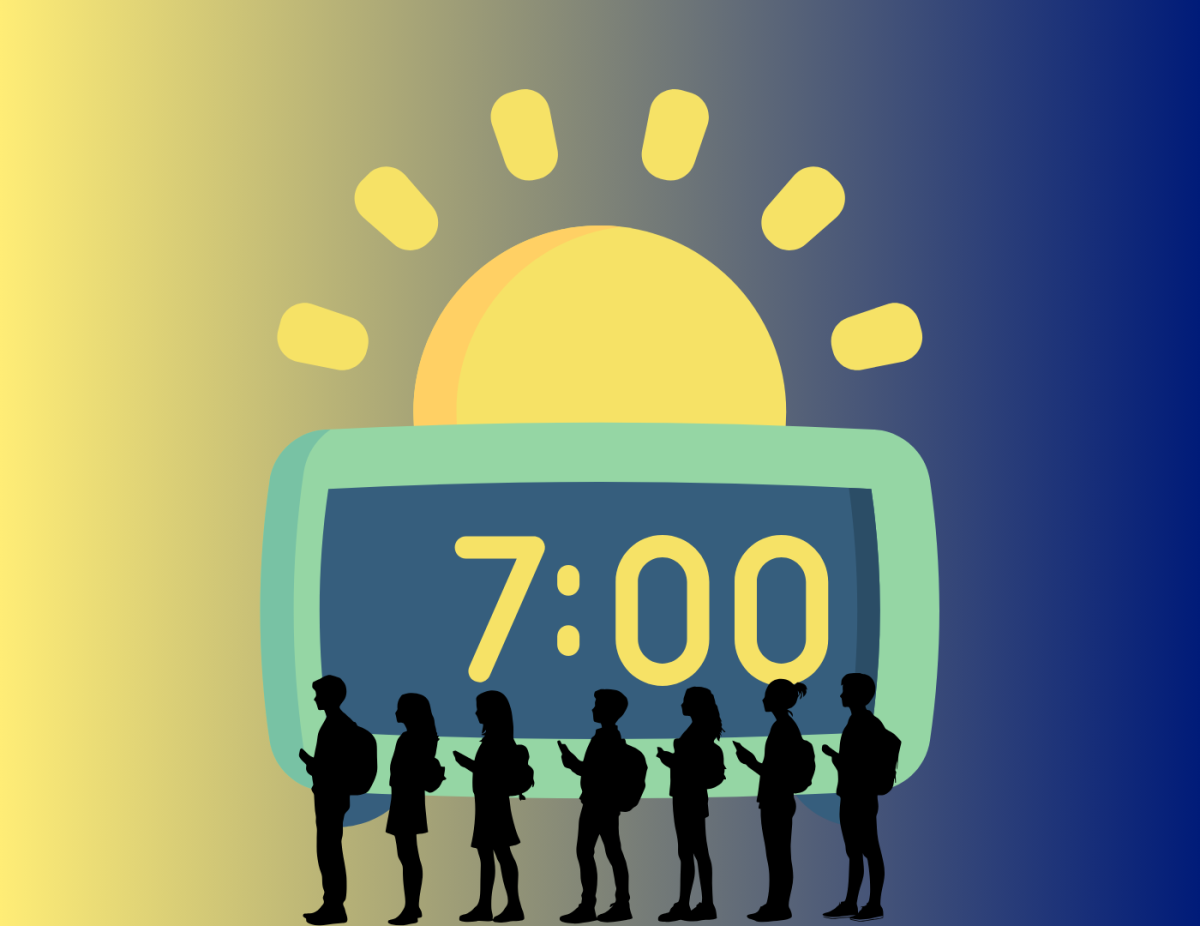
Each year, Daylight Saving Time starts on the second Sunday of March and ends on the first Sunday in November. In early spring, clocks are moved one hour forward to “spring forward” and then reset in the fall to “fall back.” This is done to improve energy conservation, economic activity and even safety. During Daylight Saving Time, individuals gain an hour of sleep in the night.
Daylight Saving Time, first adopted by the United States in 1918, started this year on May 9 and ended on Nov. 2. This impacted students, as Daylight Saving Time biologically shifts the circadian rhythm, which is the body’s natural 24-hour cycle of sleep. Everyone’s bodies have a natural schedule based especially on light for when they get tired. With Daylight Saving Time, days get darker faster.
“I think [Daylight Saving Time] is outdated and unnecessary,” Mackenzie Mohrbacher (12) said. “I don’t like how it’s dark at 6:00 p.m. because it makes the day feel so much shorter.”
For many students, this time period can feel exhausting with schoolwork and grades to maintain. Due to this, that specific point in the year is not generally met with positive feedback. On the other hand, some students find the extra hour of sleep to be beneficial. On Nov. 2, clocks were reset and students gained one hour of extra sleep before school.
In addition, part of the purpose of Daylight Saving Time is to improve safety, which comes from driving in the morning. Whether students drive themselves to school, take the bus, walk or more, roads become more visible with increasing illumination.
No matter what, everyone must go through these periods of the year, whether they enjoy them or not. Individuals have varying methods of coping with the time change.
“I have to set my watches accordingly,” Harlan Gamel (12) said. “It’s annoying, but I have to do what I have to do to keep things in order.”
Aside from physical objects, students also have to adjust to the shifts in their circadian rhythm. To do this, certain individuals choose to cope in the form of energy drinks or other sources of power. Most go to bed earlier, depending on how they adapt, with less daylight in the evenings, making it feel as though their days have become shorter.
“I think it has its pros and cons,” Ashley Benavidez-Martinez (10) said. “It’s nice to have more daylight in the mornings, but it throws me off at night when it’s already dark early, when it was still sunny and hot a few months ago.”